DLF Privana West
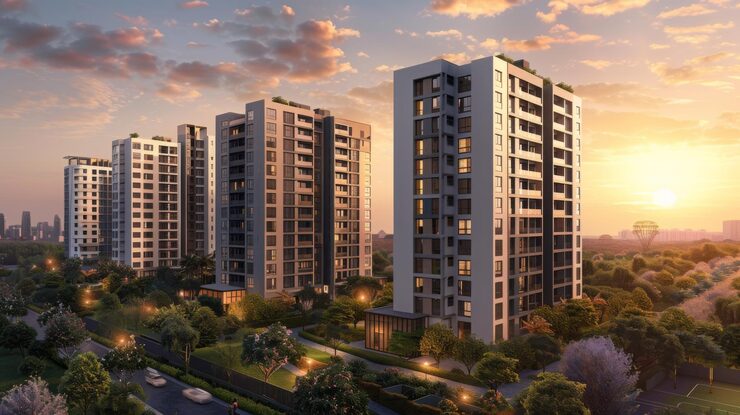
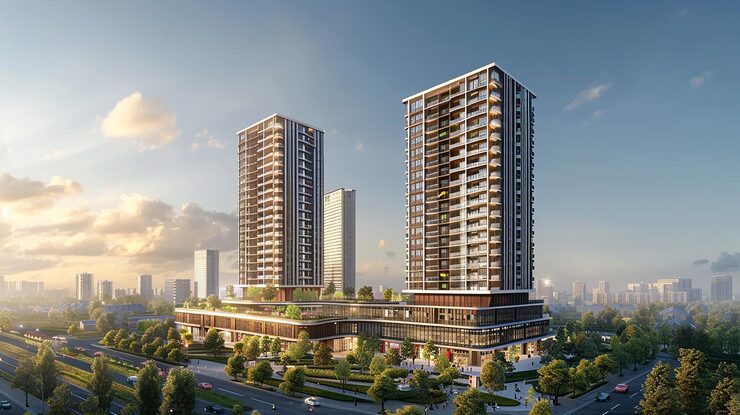
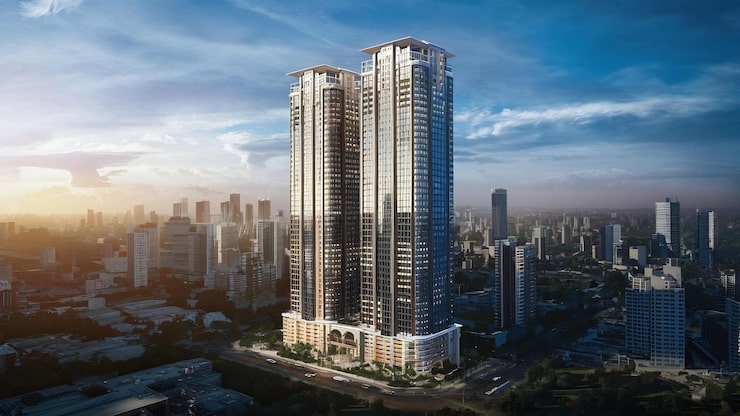
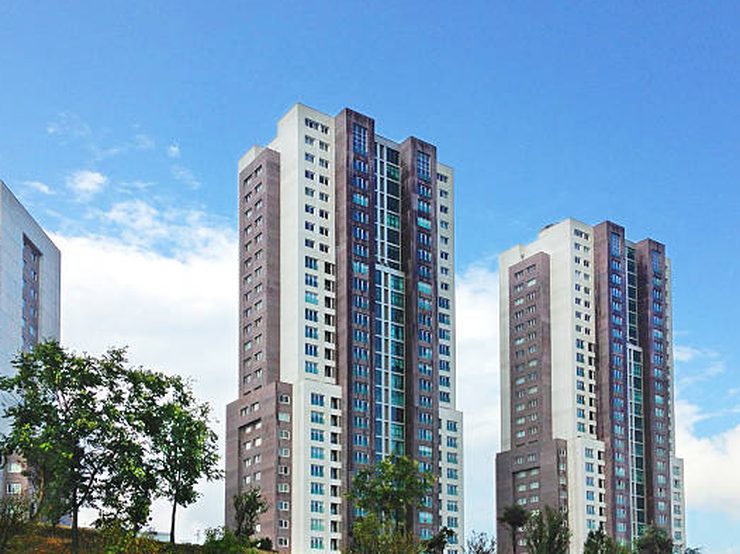
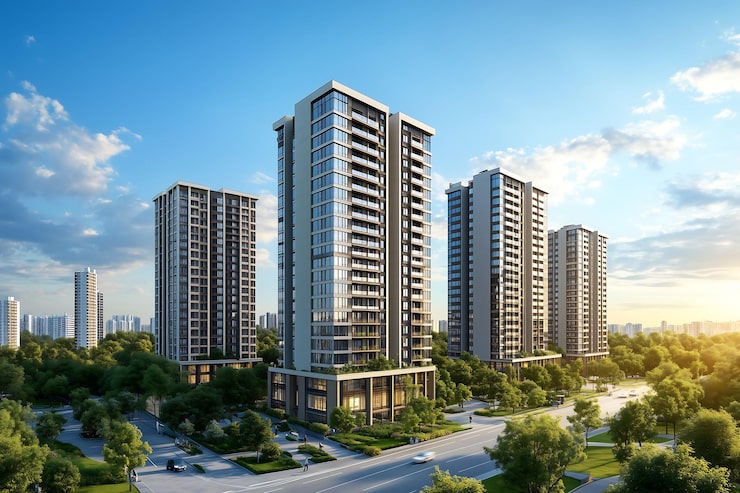
Five towers with 795 homes on 12.6 acres. Sold out in three days in May 2024 for about ₹5,590 crore. Each floor has four apartments and two penthouses. HRERA Reg. 46 of 2024.
See DLF under construction projects in Gurugram, Panchkula, Chennai and Goa. We show RERA numbers, completion dates and how to track progress before you pay each instalment.

A project is under construction when the builder has launched it and building work is going on, but the occupancy certificate is not yet issued. You cannot move in. You are buying a home that is partly or fully a plan, with a promise of possession by a date.
This is different from a new launch, where the sale has only just opened, and from a ready home, where the building is complete. Some DLF projects were launched years ago and are now near the finish, while others have just broken ground.
For a buyer, the main questions are simple. How far has the work gone? When is the registered completion date? How do my payments match the work? Is the home still available? This page helps with all four.
One practical point: a building is not equally risky at every stage. A tower that has reached its roof slab and begun finishing carries less delivery risk than one that has just laid a foundation, so ask where each tower stands.
These are DLF homes and plots that are being built in Gurugram and Panchkula. Check each card for sold-out status and the RERA number.
Five towers with 795 homes on 12.6 acres. Sold out in three days in May 2024 for about ₹5,590 crore. Each floor has four apartments and two penthouses. HRERA Reg. 46 of 2024.
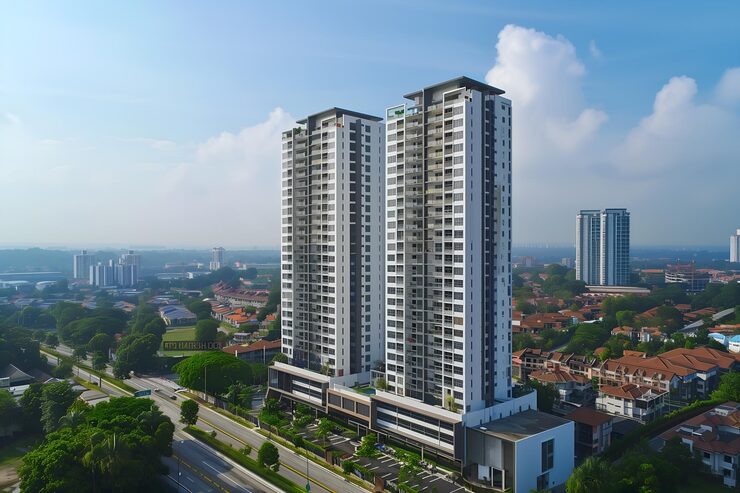
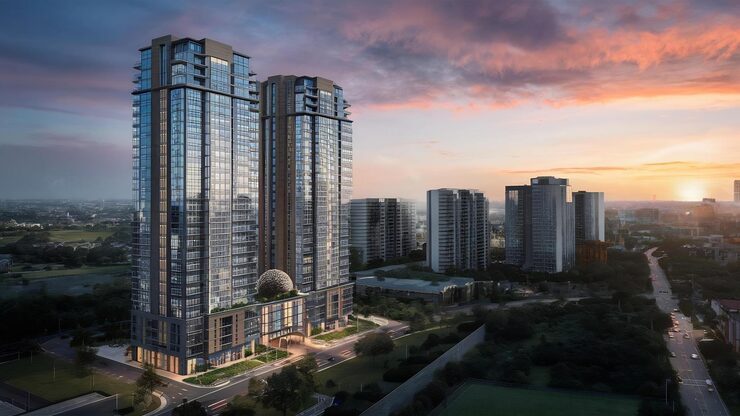
Seven towers with 1,113 homes on about 25 acres. Ground coverage is under 15%, so most of the land stays green. Sold out in 72 hours for about ₹7,200 crore. RC/REP/HARERA/GGM/772/504/2023/116.
Five towers with 1,155 apartments on 25 acres, formerly named The Sixty Three. It sold about ₹8,000 crore in three days in March 2023. HRERA form shows completion by March 2030.
Only 40 plots on 2.98 acres inside the larger DLF Alameda colony. This is plotted land, not flats. HRERA GGM/632/364/2022/107, likely completion September 2027.
512 low-rise homes (stilt plus four floors) on 15.8 acres, about 10 km from Chandigarh, with views of the Kaushalya river and the Shivalik foothills. Launched in December 2023 and reported sold out, so ask us about resale. HRERA-PKL-PKL-524-2023.
Four-storey floors in DLF's Gardencity area. Listing sites show October 2028 possession and about 291 homes. DLF's own homes page does not list it, so confirm availability with us before you plan a booking.
Low-rise floors with up to 3.2 m ceiling height, modular kitchens and home automation, on 250–300 and 500–505 sq yd plots. HARERA RC/REP/HARERA/GGM/547/279/2022/22.
We can ask about resale and cancellations. Tell us the project and your budget.
Figures marked with an asterisk are portal estimates and not DLF price lists.
These projects are shops, offices and retail space that DLF is building. They are for investors, businesses and tenants, not for homes.
A single tower of about 72 shop and apartment units on 0.89 acre in DLF Gardencity, facing a 60 m road. The HRERA form shows completion on 31 March 2028. HRERA GGM/806/538/2024/33.
Portals use this name for DLF's Sector 91 shop project, whose official name is Club Arcade. It shares the same HRERA number. The original DLF Galleria in Phase 4 is a separate, older market.
DLF's own page shows 16 commercial plots near the Delhi–Mumbai Expressway link. RERA registered in February 2023 (GGM/698/430/2023/42) with completion shown as November 2027. Plot sizes and prices are not published.
Shop-cum-office plots on an 8-acre site with 220 m of Dwarka Expressway frontage and NH-48 about 2 km away. RC/REP/HARERA/GGM/512/244/2021/80.
A planned super-regional mall of about ₹2,200 crore, with construction reported as ongoing. DLF's Downtown plan also shows a Mall of India, so confirm the exact site and RERA number with us.
A 12-acre campus with a 25 m high atrium, built with Hines. Towers 1–3 received their occupancy certificate in September 2025, and Tower 4 was due around mid-2026. LEED Platinum pre-certified.
The second round at Downtown adds four office towers and a proposed Mall of India. DLF guides completion by FY29. Tower 7 is reported fully leased.
Towers DT4 and DT5 with pocket terraces every two floors and a 2.7-acre plaza planned. DLF lists the handover as March 2027.
Formerly called DLF Avenue Goa. About 220 brands are signed, with Shoppers Stop and PVR as anchors and 201 open parking spaces. Reports point to a February–March 2027 opening.
Phase 1 of this 25-acre campus is open with IT offices and data centres. Phase 2 is being built (UPRERAPRJ385951/08/2024) and the campus holds LEED Platinum ratings.
Ask us about sizes, leasing and the stage of each building.
Offices and malls are mostly leased. Prices are on request.
Please read this before you plan a visit. Most DLF homes on this page were sold out in days when they launched. Privana West sold out in three days in May 2024. Privana South sold out in 72 hours. The Arbour sold about Rs 8,000 crore in three days in March 2023. The Valley Orchard is reported sold out.
That means these listings are mostly useful for two groups of people. The first is buyers who want to look at resale units from original owners. The second is people who want to understand what DLF builds and how it delivers before the next launch.
Two listings need extra care. Gardencity Enclave Phase 2 shows price figures from listing sites that are undated, and DLF's own homes page does not list it. Alameda Central is plotted land, not flats. We say so on each card.
If your goal is to live in a DLF home soon, be realistic about the timeline. Every home on this page is some years from handover. For a faster move, speak to us about your needs, and we will tell you what the market offers.
A short table of what is on record. Always re-check on the RERA website, because dates can be extended.
| Project | RERA number | Date on record | Source of date |
|---|---|---|---|
| Privana West | RC/REP/HARERA/GGM/819/551/2024/46 | Possession Dec 2028 | DLF project page |
| Privana South | RC/REP/HARERA/GGM/772/504/2023/116 | Ask us | Ask us |
| The Arbour | HRERA form (two filing IDs) | Completion by Mar 2030 | HRERA form |
| Alameda Central | GGM/632/364/2022/107 | Likely Sep 2027 | Portal and HRERA |
| The Valley Orchard | HRERA-PKL-PKL-524-2023 | Ask us | Ask us |
| Gardencity Enclave Phase 2 | Ask us for the HRERA number | Oct 2028 | Listing sites, undated |
Always match the number and date on the RERA website before you rely on them.
Many under construction homes use a construction-linked plan. You pay a booking amount, then instalments as the builder reaches set stages. A stage might be excavation, a structure level or a finishing step. Each demand letter should name the stage that triggered it.
This is a safer way to pay than a plan that asks for most of the cost up front. If work is slow, your payments are slow too. Under RERA, a builder cannot take more than 10 percent before a registered agreement for sale, and the money collected is meant to be used for the project through a separate account.
Some projects offer other plans, such as a time-linked plan where you pay on dates. Ask which plan applies and what happens if the building runs behind. Do not choose a plan only because it looks cheap at the start.
If you take a home loan, the bank usually releases money in stages as the builder submits proof of work. That lines up well with a construction-linked plan, and you pay interest only on the released amount.
These steps help you see how far work has gone, without relying on a sales message.
Search by name or RERA number. Note the registration date, the promoter and the declared completion date.
Promoters are asked to update their project pages regularly. See what stage is shown and when it was last updated.
Each payment request should name a stage. If you pay for a slab, the slab should exist.
Ask for a visit and take dated photos. Compare them with the update on the RERA page.
A written report from the builder shows floors cast and finishing started. Save it with your records.
A two-minute check on the RERA page before each instalment keeps you informed.
The registered completion date on RERA is the date that counts. Marketing dates may be earlier. DLF has shown October 2028 on listing sites for Gardencity Enclave Phase 2, December 2028 for Privana West, and September 2027 for Alameda Central. The Arbour's HRERA form shows March 2030.
Treat these as targets. Projects can be extended for reasons allowed by law, and the builder may ask RERA for more time. Read the agreement to see what delay is allowed and what interest you get if possession is late.
Possession is not the same as completion. After the occupancy certificate, there are steps such as final payment, handover paperwork and fit-out time. Ask the builder for the full list of steps so there are no surprises.
A simple habit helps: write the date from the agreement, the date on RERA and the date the sales team gives in three lines. If they differ, ask which one is right and get the answer in writing.
Shops and offices follow a different path from homes. Club Arcade shows completion on 31 March 2028 on its HRERA form, and Arcade 68 shows November 2027. Gardencity Central sells shop-cum-office plots, and prices are not published.
Large office campuses are leased to companies. Atrium Place has three towers with an occupancy certificate and a fourth due around mid-2026. Downtown Phase 2 in Gurugram is guided for FY29, and Chennai Phase 2 lists March 2027. Promenade Goa points to February to March 2027.
Remember that portals sometimes use different names for one project. Galleria 2 and Club Arcade share one HRERA number. Ask us for the correct name before you pay.
For investors in shops, the key questions are who the tenants will be, how footfall will grow and what the likely rent is. A lease-backed deal is easier to judge than one with no tenant. We do not publish rent figures until DLF or a lease document gives them.
GST is one of the main differences between an under construction home and a completed one. GST is generally payable on a flat bought before the occupancy certificate, and not payable after it. The rate depends on the property type and can change, so ask your adviser for the current rule.
Stamp duty and registration are charged by the state, and they depend on where the home is. Haryana, Maharashtra and Goa each have their own rates. Check the current figure on the state website. You pay stamp duty when the agreement is registered.
Add the other charges: parking, club membership, power backup, maintenance deposit and legal fees. On a large home they can reach a notable sum. A good cost sheet lists each of them, and you should insist on one.
Compare the total cost of an under construction home with a ready one, including the rent you pay while you wait. The lower price may not be a real saving once you count the wait.
A simple guide to what each stage means for you as a buyer.
The ground work is done. Ask for dated photos and the structural engineer's name.
Floors are being cast. This is when most of your instalments fall due, so check each demand against progress.
Walls, pipes and cables go in. Ask about the quality of materials and the list of brands.
Flooring, doors and fixtures are fitted. Ask for a sample flat to compare with the brochure.
The local authority certifies the building is fit to live in. GST is generally not charged after this.
You sign the final papers and take the keys. Inspect the unit before you accept it.
This page is only about under construction homes. Here is a brief comparison with a completed home.
You pay as the building rises, so less money is locked in at the start.
Earlier buyers had more choice of floor and view, though sold-out projects now offer resale only.
Possession can slip. RERA gives a route for interest, but the delay still costs you time.
You may pay a loan instalment and rent together until you move in.
A completed home with an occupancy certificate does not attract GST.
Newer towers bring current layouts and building standards.
Since many projects are sold out, resale is often the only path. A resale buyer takes over the rights of the original allottee. You need the allotment letter, payment receipts, builder's no-dues note and written approval for the transfer.
Pay the seller only after the builder has accepted the transfer. Do not pay the full amount to the seller and hope the paperwork follows. Ask for the builder's transfer charges in writing and for the stage at which the building stands now.
Common mistakes include trusting an old price from a portal, skipping the RERA check and paying a broker before documents are clear. Take your time, ask questions and use a lawyer for the final papers.
Tell us the project and your budget. We will share RERA details, dates and what is still available.